What Are Delft Tiles?
History, Craftsmanship and How They’re Used Today
At Plain English, we favour materials with history – those shaped by hand and designed for practical use. Delft tiles speak to this sensibility. Made in the Netherlands since the 17th century, they are recognised by their soft tin glaze and painted surface. First created to line hearths and sculleries, they remain a meaningful presence in homes today.
Here, we trace their origins, how they’re made and the role they continue to play in considered interiors.
Defining Delft
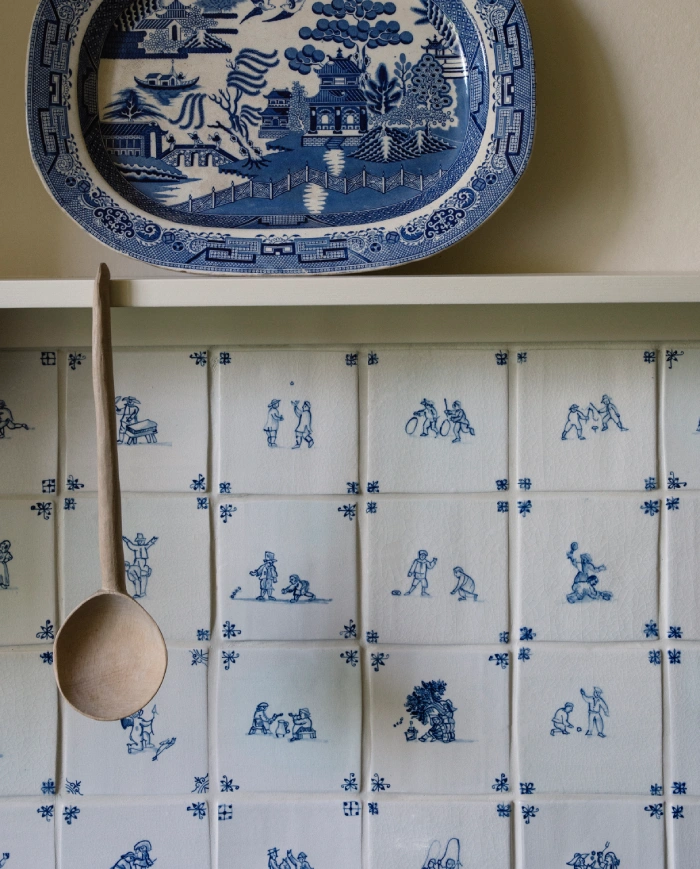
Delft tiles are square ceramic tiles finished with a tin glaze, which gives them a pale, matte surface ideal for painted decoration. Named after the Dutch city where production first flourished, they are typically painted in blue, though other natural pigments were used.
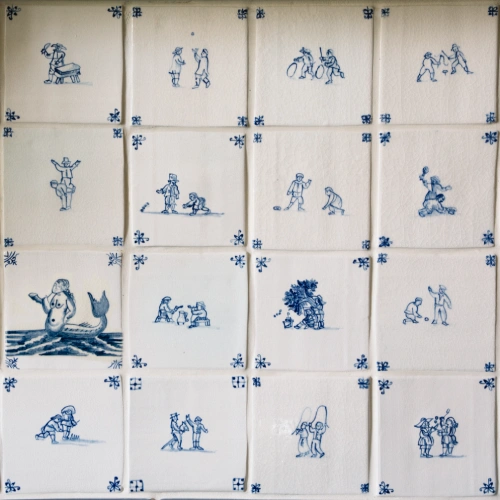
Each tile depicts a single scene – rural life, a sailing vessel, a moment at rest. They differ from patterned or printed tiles, as each image stands alone, offering quiet narrative rather than repetition.
A Short History of Delft Tiles
The style emerged in the Netherlands in the late 1500s, shaped by the arrival of tin-glazing techniques from Italy and Spain. As imported Chinese porcelain became popular, Dutch makers began to imitate its blue-and-white decoration using local materials.
Delft tiles soon spread across Northern Europe, used in kitchens, around fireplaces and in dairies – spaces where utility and visual detail lived side by side. Antique Delft tiles from this period still survive, worn smooth by daily use.
Making by Hand
To make a traditional Delft tile, a clay square is glazed, painted by hand and fired again to fix the design. Each brushstroke is final, giving the tiles a direct and expressive quality.
Minor irregularities – slight shifts in line or spacing – are not flaws but evidence of the hand at work.
Common Delft Tile Styles and Motifs
Many Delft tile styles reflect daily life in 17th-century Europe:
- Pastoral scenes – rural landscapes, shepherds, windmills
- Mythological or biblical figures – often simplified to suit the small format
- Children at play – skipping rope or playing instruments
- Maritime imagery – ships, ports and sea creatures
- Animals and flowers – domestic or symbolic forms
Most are framed by corner motifs – small flourishes or “ox-head” loops that create rhythm when placed together. Narrative remains central to their appeal.
How Delft Tiles Are Used in Interiors Today
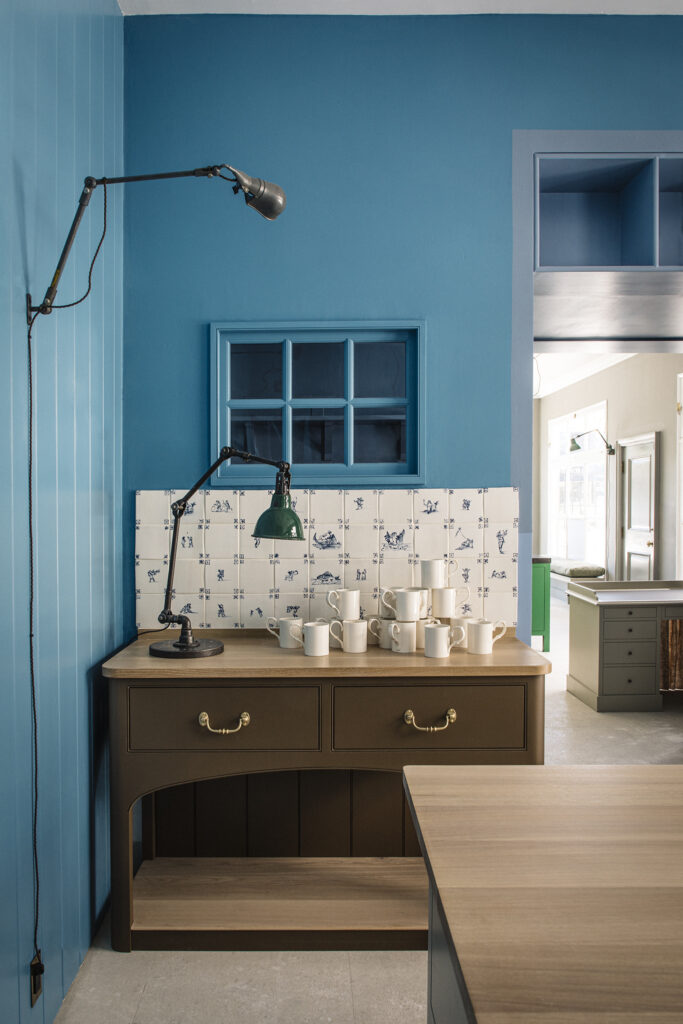
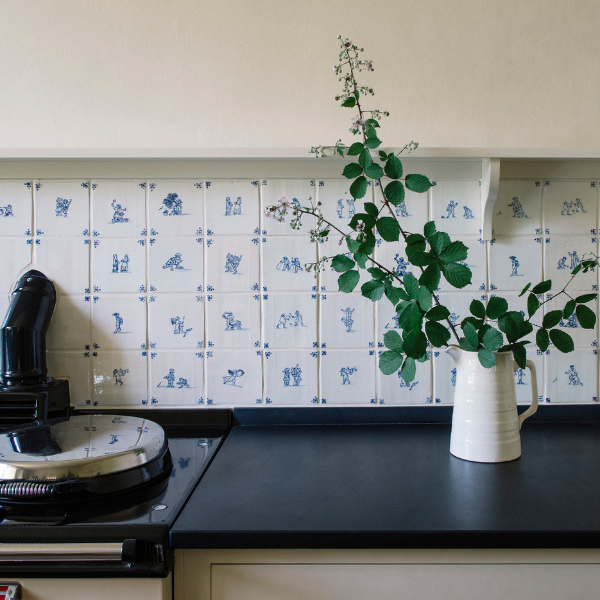
Delft tiles remain a natural choice for kitchens, used behind ranges, near sinks or around a chimney breast. Their soft surface pairs well with natural materials such as oak, marble and hand-painted cabinets.
In kitchens using Delft tiles, they provide a counterpoint to precise joinery and bring a sense of rhythm and lived-in ease.
Delft by Plain English
Delft by Plain English is our own interpretation, created with artisans using historic tin-glazing methods. The five designs draw on English and Dutch references – East Anglian brickwork, working buildings and quiet domestic rituals.
Available only as part of a Plain English project, the tiles are made to sit quietly alongside our custom kitchen cabinets, Colour Collections and ironmongery. Part of the whole, not apart from it.
The Enduring Appeal of Delft Tiles
At Plain English, we think often about the kinds of details that give a room its character. Delft tiles are one such detail – practical, enduring and full of quiet expression. They remind us that the best interiors are not always the loudest, but those that unfold slowly through time and use.
If you’re considering Delft tiles within a bespoke Plain English project, we’d be pleased to explore the possibilities with you. Make an enquiry today to get started.